Friday, April 10, 2015
Blog post 10
Monday, March 30, 2015
blog post 10
![]() |
| this is the plants female parts |
![]() | |
| this is the flower as a whole |
![]() | |
| this is the flowers male parts the anthors whitch spreads the pollon in the air to bees |
![]() |
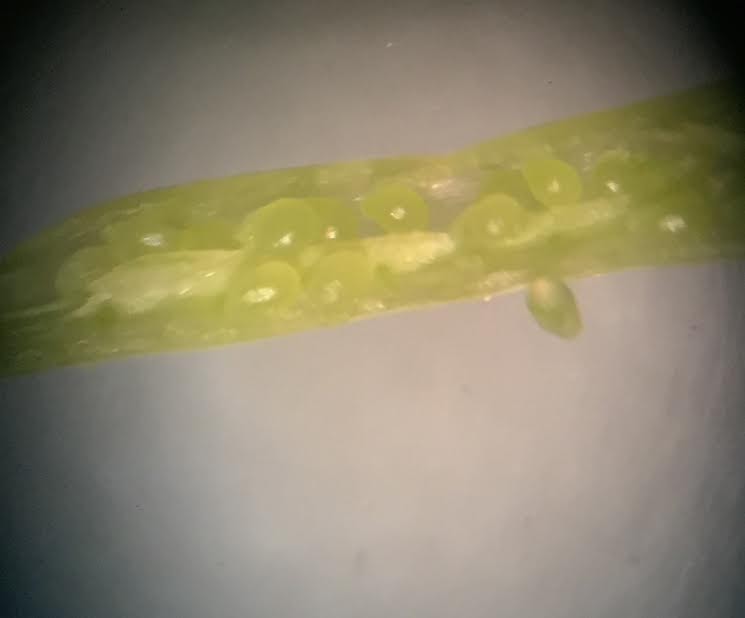
| this is the plants seeds |
Sunday, March 29, 2015
Blog post 10
| In this picture, you can see both the anther, and the filament. A filament is a long, thin stalk that supports the anther. |
Wednesday, February 4, 2015
Eliot Marinshaw Gattaca essay
Friday, January 30, 2015
A millon years
In the game who wants to live a millon year it took many trys to make it all the way to a millon years
You have to choose a breed that u predict to live a millon years but there is alwas a catch there is drought or cold weather and u have to have the right breed to live a millon year if they cross breed it can create the perfect animal
Over time the animals increase and mutate but it needs to be perfect for the animals to live a millon year.
The animals might be changing but the evoriment changes to and the animal will die or reproduce more
Post 9
I think that breeder have to pick and choose the breeds like the how to live a millon year.there are natural selection but u need artafiacal selection to make a plant worthy to be a cash crop.
The plant can become strong and will be the best breed
Thursday, January 29, 2015
Who Wants to Live a Million Years: Analysis of a Natural Selection Simulation
2. The phenotypes/phenotype combinations I chose were the ones that could survive through cold, and humid conditions, and prevent other species attacking them. I think they survived the longest because, as Darwin quotes "survival of the fittest" which shows how I won the game using the techniques of choosing the right species of survival.
3. I think that the population of theoretical creatures would be affected by genetic drift because over time, the creatures are going to adapt differently to new environment changes and may have a gene variant change. The evidence of drift I noticed in the game was that over each generation, the organisms/species adapt to other environmental changes and survive through the generations.
4. The alleles/phenotypes that seemed to be dominant are when the species I chose in the game adapted/evolved to the environment, and how the species changed their traits and adaptation skills through the process of different climate and species breeding.
5. When the species face a new environmental change/threat, the way they respond to it dictates their phenotypes of being dominant/recessive, or the way they react and adapt to the change, for example: in cold conditions, if the species react the adaptation properly, will grow fur and hibernate and survive through the winter, in hot conditions, they will shed their skin, when a new large predator joins the scene, the species will usually fight back/run away, for a new tall food source, the surviving species who are tall enough to eat the tomato looking plants in the game will soon breed and exhibit variations and will be able to eat the plant for the next generation.
6. I would improve this simulation biologically by putting in real animal species, that show a realistic example of the animals real life natural selection process. I would also put in description of the environments on how the can effect the species, and lastly I would put on a description of the natural selection process from Charles Darwin himself, and facts about alleles/phenotypes to make it less confusing.
Wednesday, January 28, 2015
Blog Post 9 Eliot Marinshaw
1. The part of the plant that had the greatest number of forms had to be the width of the leaf (5 in), and the length of the leaf (13 in) because of the different shape and size compared to the other plants. The other characteristic of the plant had to be the length of the leaf (13 in) compared to the height of the stem (7 in) because of the great difference in size.
Friday, December 12, 2014
Blog post 4
-Air
-Water
-Soil
-Pollen
They all rely on the plant and help it survive by keeping it together with their enviormental uses.
2. The plants are competing with nature itself, and the envirorment around it.
3. The "winners" and "losers' in the struggle would have to be: the plants who aren't being supported, and the ones who aren't in a good enviorment that can't survive. What makes the determination complication sometimes is that it's hard to tell sometimes if you don't know what you're doing.
4. Other types of interaction with the plant involved is that sometimes it reacts to extreme growth when it mildly sprinkles, which shows it competing with the envirorment, which shows interaction.
5. The evidence in the garden that is occurring in the ecosystem is that the plant is healthy and growing.
Blog post 8 Brendon Smith
blog post 8 Eliot Marinshaw
Blog post 3
2. The water cycle has affected the plants growth greatly.
3. The plants took the air and turned the carbon into oxygen.
4. The plants took the nitrogen in the soil and continued to grow.
Tuesday, December 9, 2014
blog post 7
i think the parent plants were of the same breed and the offspring is exact pure breed family this plant and its siblings are exactly alike so i thingk that they have been imbreeded. they like like nothing the site shows the actual look alikes.
blog post 5
blog post 4
abiotic it he animals that are eating it
biotic is the soil and nutrients
2.the are battling for space with the other plants that are planted near or around the plant
3. the stronger plants will often win so i have the better breed so far. they have to battle for root space and food and air and sun in an area
4.there is holes in the leafs of my plant. i think these have been eaten by some small animal such as butterflies or caterpillars
blog post 3
2.our plants take in water consume the water and recycle it when they don't need it trough the leaf
3. our plants took the carbon out of the air and made it in to oxygen
4. our plants changed the nitrogen in the soil to use to make them stronger and grow.
Friday, November 14, 2014
seed post 6
Thursday, November 13, 2014
Thursday, October 9, 2014
post 1
brassica oleracea
did you know a lot of brassica are important vegetables.
the first day we got the seeds the were not active
the next time we saw them 0% salt grow
now they have been transplanted to the class garden.